Is It Risky to Outsource Sanitary Pad Production? A Manufacturer’s Reality Check
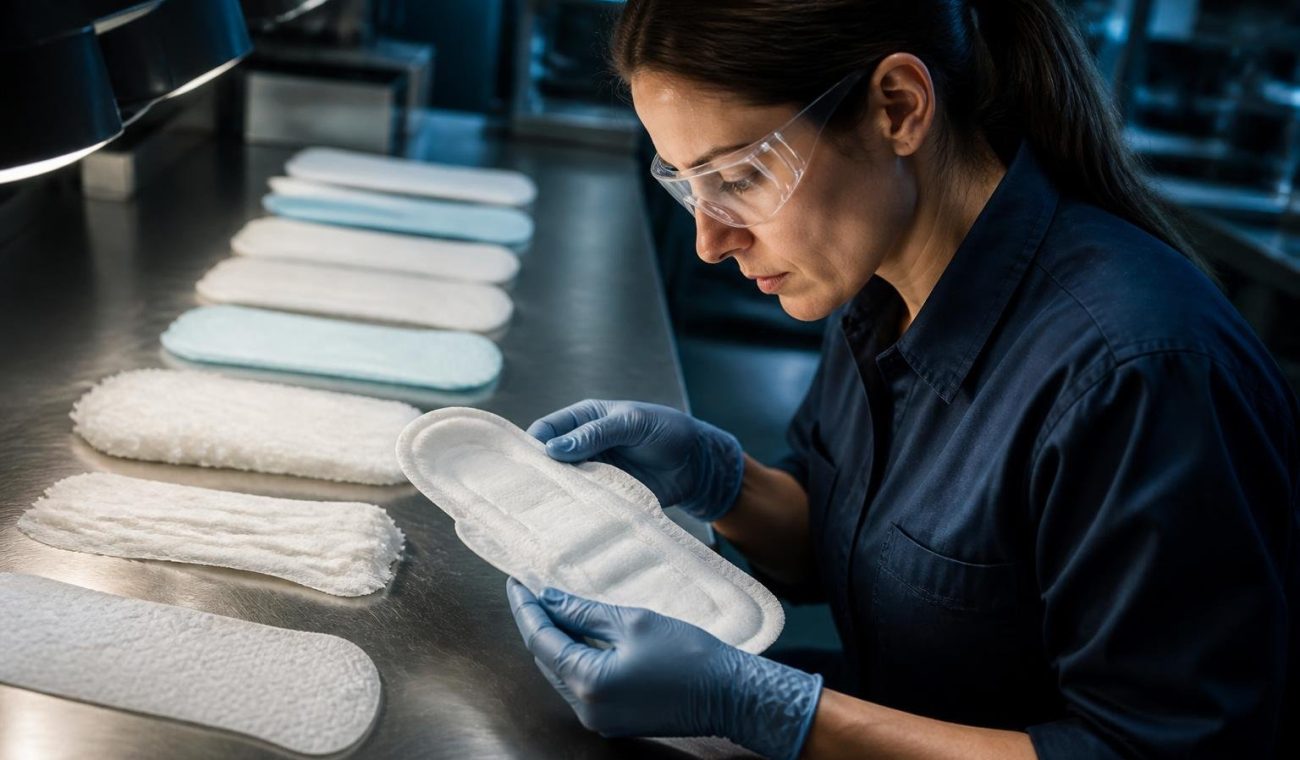
On-the-floor failures I keep seeing
I was knee-deep in a Guangzhou line audit (March 2021) when a whole shift of samples failed—this is about menstrual pads, and it matters. I vividly recall a 300mm overnight ultrathin pad prototype that leaked in 18% of wear trials during an eight-hour simulation—does that mean outsourcing erodes quality control? No cap: that number shifted my view on what "quality" really costs on the factory floor.
I’ve spent over 15 years in B2B supply chain and retail sourcing, and I keep seeing the same technical blind spots. Manufacturers chase ultra-thin profiles, swap thick airlaid cores for cheaper pulp blends, or skimp on the superabsorbent polymer (SAP) dose to hit price targets. The result? Compromised acquisition channels—bad runnability, inconsistent PE backsheet lamination, and odd wet-back complaints. I remember a run in Q4 2019 where a non-woven bonding change caused a 12% spike in customer returns the following month. We fixed the recipe, and complaints dropped by 23% after retesting in April 2020. That’s not theory; it’s math and spill testing. Here's why that leaks into product design — next up, real fixes.
Technical roadmap: what I recommend next
What's Next
Now I switch gears to a forward-looking, technical stance. We went deep: I mapped capillary gradients, matched SAP distribution to sleep-cycle loads, and requalified backsheet adhesives. I mean, I tore down the BOM and re-ran lab and pilot-line trials. For buyers: evaluate material pairing—not just grammage. For example, a 4-5 g/m2 PE backsheet with a zoned SAP layout beat a uniform 6 g/m2 core in leakage tests for overnight designs. Wait—these tweaks are small but they matter in scale.
When I consult, I test three variables in sequence: acquisition rate, retention under pressure, and backsheet integrity during flex cycles. We instrument pads in a simulated 8-hour wear rig and log absorption curves—data wins over branding. Use bench metrics and a short factory-run (1,000 pcs) pilot to validate before scaling. For tradeshow sourcing in Shenzhen last year I flagged suppliers that passed wet-back and compression hold tests; the winners delivered consistent airlaid density and SAP dosing across rolls. That consistency cut my rework time by roughly 30% in one program.
How to choose partners — three key metrics
I keep this tight and actionable. First: acquisition rate (seconds to surface saturation) — measure and insist on lab reports. Second: retention under pressure (grams/cm² after 2,000 cycles) — simulate sleeping positions. Third: production consistency (standard deviation of SAP weights across a 10,000-piece run) — insist on real roll-level data. These three numbers separate talk from true capability.
Pick suppliers who share raw roll traceability, offer on-site sampling, and let you run split-line trials. I’ve held suppliers to these metrics in contracts since 2018; the result: fewer recalls, faster time-to-shelf, and better margins. Short interrupt—this is where negotiation gets tactical. Then you scale.
For a grounded partner with technical chops and steady supply, I recommend you check options from Tayue.