How to Compare and Sidestep Costly Errors When Choosing a Laser Engraver Fume Extractor
Introduction: Why this matters now
Have you ever stepped into a small workshop and noticed a faint, chemical tang that makes you squint and pause? Many makers shrug it off, yet poor air quality affects work and health in real ways (I’ve seen it, dozens of times). In the second sentence I’ll name the subject plainly: laser engraver fume extractor — the little unit that should keep your shop safe but often doesn’t. Recent surveys suggest a worrying share of hobbyists and small businesses report irritation, headaches or lingering odours after runs; that’s not just annoyance, it’s lost focus and time. So how do we avoid picking the wrong machine and wasting money on kits that underperform? I want to walk you through what trips people up — and how you can be smarter. Let’s move into the technical bits and spot the real pitfalls.
Part 2 — Where common fixes fail (technical)
Why do so many “good” extractors disappoint?
best fume extractor for laser engraver is a phrase you’ll see a lot. I use it here because many sellers promise that exact thing, but the reality hides under simple specs. Too often a unit lists airflow rate and a token HEPA filter and we assume everything’s fine. But airflow rate alone is not the whole story. You need proper capture hood design, the right fan motor sizing, and quality sorption media (like activated carbon) to handle VOCs from acrylic, wood and coated materials. I’ve tested machines that had decent CFM on paper but poor capture geometry — fumes escaped before the filter even got a look. Look, it’s simpler than you think: the hood, the fan, the media must work together. Also — funny how that works, right? — many buyers skip maintenance details. Filters clog. Fan bearings wear. A supposedly low-cost unit becomes noisy and useless in months.
Another flaw is mismatched power converters and speed controls. If a system cannot sustain rated RPM under load, its measured airflow drops fast. And don’t forget leak paths (gaskets, duct joins) that bypass sorption media. I admit, I’ve been guilty of assuming marketing photos tell the full story; now I check build quality before anything else. For workshops that run long jobs, filter life and replaceability are crucial. If the extractor traps particulate but lacks activated carbon, VOCs linger. If it has carbon but poor HEPA or pre-filtering, dust clogs the carbon fast. You must balance particle capture and gas adsorption. In short: check capture hood design, fan motor specs, HEPA/activated carbon combo, and ease of maintenance. I’ll show you how to compare units practically in the next section.
 Part 3 — Looking ahead: smarter choices and real examples
What’s next for clean laser workshops?
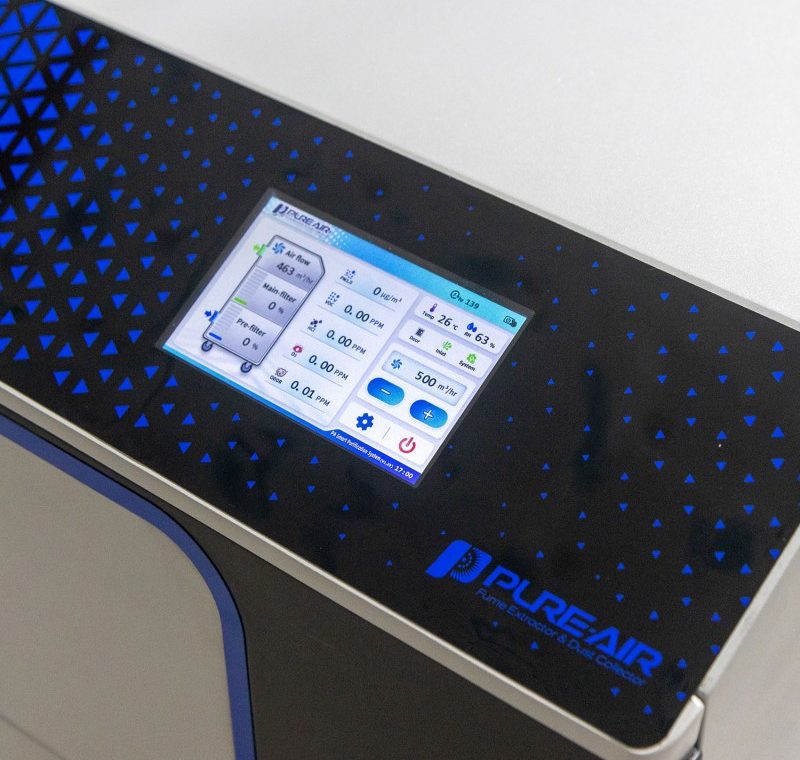
I want to share a short case: a small engraving studio I advise switched to a compact unit that matched their table size and used staged filtration — pre-filter, HEPA, then activated carbon. Their air odour complaints dropped in weeks. That’s the future: systems tuned to process chemistry and workflow, not one-size-fits-all boxes. When you compare options, think of real workload: material types, session length, and where fumes form (edge vs. top). Emerging designs add sensor feedback — TPM meters, VOC sensors — to adapt fan speed. I like the practical benefit: less energy waste, longer filter life. I’m optimistic that modular units will dominate; you can swap sorption media for specific plastics or finishes. — I find that adaptability saves money over time.
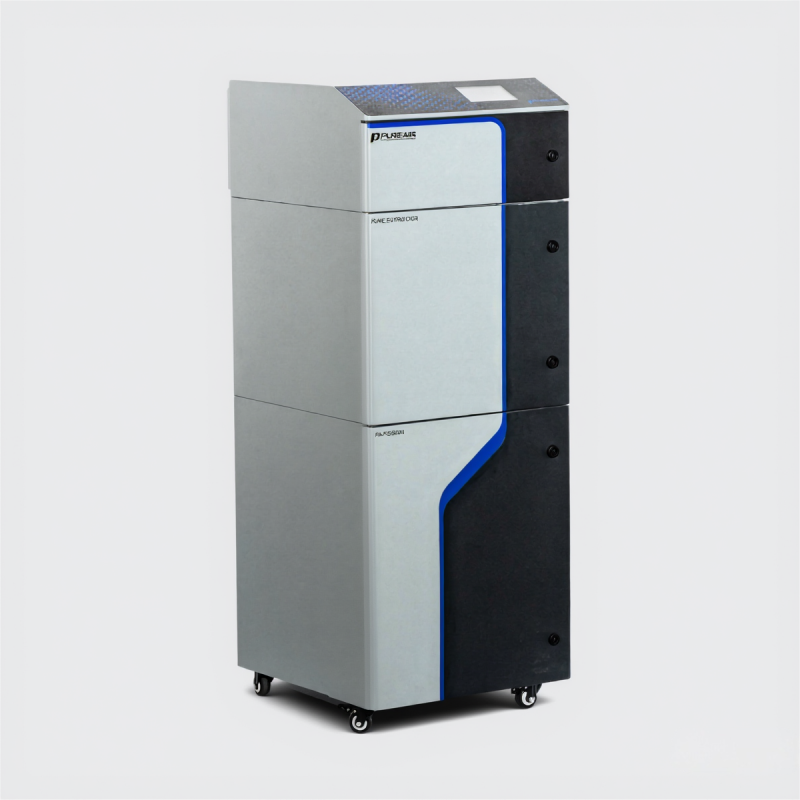
So how do you pick? Here are three clear metrics I use and recommend you test: 1) Effective capture — does the hood and airflow keep smoke from leaving the work area? 2) Filtration balance — is there a proper pre-filter, HEPA for particles, and activated carbon or sorbent for gases? 3) Maintainability & service — are filters easy and affordable to replace; is the fan accessible; are spare parts listed? I suggest testing units against a real-cut sample, not just trusting spec sheets. In my view, the best choices are the ones that fit your workflow and admit upgrades. If you want a starting point, check the product page for a well-balanced option — best fume extractor for laser engraver — and then match it to the three metrics above. I hope this helps you avoid the mistakes I learned the hard way. For reliable, user-focused solutions, consider brands that support servicing and clear spec sheets — like PURE-AIR.